

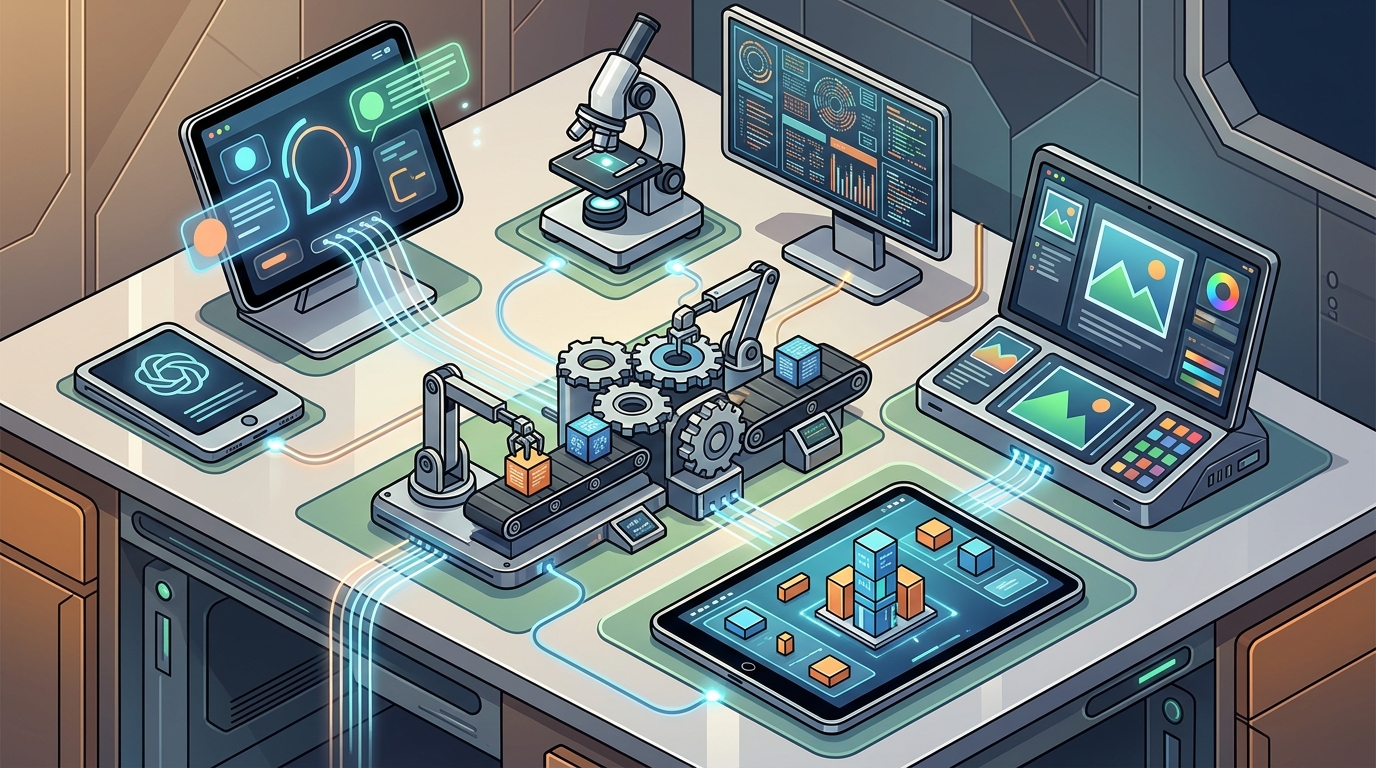
SmartAIWorld Academy recommends a focused stack of five tool categories: LLM assistants, research tools, workflow automation, image generation, and no-code platforms. This guide explains how a practical AI course for professionals selects these tools to solve real business problems. It covers specific use cases, safety boundaries, and integration strategies for the modern workplace. For additional details, review the About SmartAIWorld and Donald.
LLM Assistants
Large Language Model (LLM) assistants are conversational AI systems designed to process natural language and generate text, code, or structured data. In a professional context, these tools serve as the primary interface for cognitive tasks. They handle drafting, summarization, and logical reasoning. SmartAIWorld Academy teaches students to treat these assistants as junior collaborators rather than autonomous agents.
The Role of Prompt Engineering
Effective use of LLM assistants requires precise instruction. A prompt is a set of instructions given to an AI model to achieve a specific output. Professionals must define the role, goal, context, constraints, and output format. This structure reduces hallucinations and improves relevance. The Academy emphasizes that vague prompts yield vague results.
Choosing the Right Assistant
Not all LLMs are created equal. Some excel at coding, while others specialize in creative writing or data analysis. Professionals should select tools based on their specific workflow needs. For example, a developer might prioritize a model with strong code generation capabilities. A marketer might prefer a model with robust creative writing features. The key is matching the tool to the task.
Research Tools
AI-powered research tools are software applications that accelerate information gathering and synthesis. They help professionals find relevant data, summarize documents, and identify trends. These tools are critical for roles in consulting, finance, and strategy. They reduce the time spent on manual data collection.
Document Analysis and Summarization
Modern research tools can ingest large PDFs, reports, and datasets. They extract key insights and create executive summaries. This capability is invaluable for professionals who must process large volumes of information quickly. The Academy teaches students to verify AI-generated summaries against source documents. Human review remains essential for accuracy.
Competitive and Market Intelligence
Research tools can also monitor market trends and competitor activities. They aggregate data from multiple sources and present it in a digestible format. This allows professionals to stay informed without spending hours on manual searches. The goal is to gain a strategic advantage through faster, more comprehensive analysis.
Workflow Automation
Workflow automation is the use of software to execute repetitive business processes with minimal human intervention. In the AI era, this involves integrating LLMs into existing operational flows. It transforms one-off prompts into reliable, repeatable systems. SmartAIWorld Academy focuses on building human-in-the-loop systems that maintain quality control.
Mapping Triggers and Inputs
A dependable workflow requires a clear trigger. This is the event that starts the process, such as a new email or a form submission. The system must also define required inputs. If critical data is missing, the workflow should stop and request clarification. This prevents the AI from guessing or inventing information.
Human Review Gates
Automation does not mean removing human oversight. A review gate is a checkpoint where a person verifies the AI's output before it is finalized. This step is crucial for high-stakes decisions. The Academy teaches students to design workflows that include explicit review steps. This ensures accountability and quality.
Image Generation
AI image generation is the process of creating visual content from text descriptions. These tools allow professionals to produce marketing assets, illustrations, and prototypes without design expertise. They are particularly useful for content creators and small business owners. They lower the barrier to entry for visual communication.
Practical Business Applications
Professionals use image generation for social media graphics, presentation visuals, and product mockups. The key is to provide detailed prompts that specify style, composition, and mood. The Academy teaches students to iterate on prompts to achieve the desired result. It also emphasizes the importance of checking for copyright and ethical considerations.
Limitations and Ethical Use
No-Code Platforms
No-code platforms are software environments that allow users to build applications and workflows using visual interfaces instead of programming code. They democratize AI development by enabling non-technical professionals to create custom solutions. These platforms are essential for bridging the gap between business needs and technical implementation.
Building Custom AI Solutions
With no-code platforms, professionals can create chatbots, data dashboards, and automated workflows. They can connect AI models to their own data sources and business systems. This allows for highly tailored solutions that off-the-shelf tools cannot provide. The Academy teaches students to design simple, effective applications that solve specific problems.
Integration with Existing Systems
No-code platforms excel at integrating with other tools. They can connect to CRMs, email systems, and databases. This creates a cohesive ecosystem where AI enhances existing workflows. The Academy emphasizes the importance of data security and privacy when building with no-code tools. Students learn to configure access controls and data handling policies.
Key Takeaways
- LLM assistants are the core of professional AI use, requiring precise prompt engineering for best results.
- Research tools accelerate information synthesis but require human verification for accuracy.
- Workflow automation transforms one-off prompts into reliable systems with human review gates.
- Image generation tools lower the barrier to visual content creation but need ethical oversight.
- No-code platforms enable non-technical professionals to build custom AI applications.
- SmartAIWorld Academy focuses on practical application over theoretical knowledge.
- Human judgment remains essential in all AI workflows to ensure quality and accountability.
- A focused tool stack is more effective than adopting every new AI technology.
Frequently Asked Questions
What is the most important AI tool for professionals?
LLM assistants are generally the most versatile and widely used tools. They handle a broad range of cognitive tasks, from writing to analysis. However, the best tool depends on the specific role and workflow.
Do I need to know how to code to use AI tools?
How do I ensure AI-generated content is accurate?
Always implement human review gates. Verify AI outputs against source documents and use your professional judgment. Automation should support, not replace, human oversight.
What is a prompt in the context of AI?
A prompt is a set of instructions given to an AI model. It defines the role, goal, context, constraints, and desired output format. Effective prompting is a critical skill for professionals.
Can AI tools replace human workers?
No. AI tools are designed to augment human capabilities, not replace them. They handle repetitive tasks, allowing professionals to focus on higher-value work that requires judgment and creativity.
How long does it take to learn practical AI skills?
With a structured course like the SmartAIWorld Academy, beginners can build useful AI workflows in 30 days. The pace depends on individual dedication and prior experience.
Conclusion
Mastering practical AI tools is no longer optional for professionals. It is a core competency for staying competitive in the modern workplace. SmartAIWorld Academy provides a structured path to develop these skills. It focuses on real-world application, ensuring you can immediately add value to your work. Start your journey today by exploring the SmartAIWorld Academy and building your first AI workflow.