

A work task is a good candidate for AI assistance when it involves repetitive information processing, requires pattern recognition, or benefits from rapid drafting and summarization. SmartAIWorld Academy teaches that the best AI applications are not about replacing human judgment, but about automating the mechanical steps of a workflow so professionals can focus on strategy and review. By identifying tasks with clear inputs and defined outputs, you can build reliable systems that save time and reduce errors. For additional details, review the About SmartAIWorld and Donald Upton page.
The Repetitive Factor
Repetition is the strongest signal that a task is ready for automation. If you perform the same sequence of steps daily, such as formatting reports or answering common customer questions, AI can handle the execution. SmartAIWorld Academy emphasizes that humans are better suited for creative direction and exception handling, while AI excels at consistent, high-volume processing. For example, a marketing manager who writes five similar social media captions every week is performing a repetitive task that AI can streamline significantly.
Clarity of Inputs and Outputs
A task is a strong AI candidate when you can clearly define what information goes in and what result comes out. Task screening criteria require that the input data is structured or easily convertible into text, and the desired output is specific. If you cannot explain the goal of the task to a new hire in simple terms, AI will likely struggle to execute it effectively. Consider a data entry clerk who transfers information from PDF invoices to a spreadsheet; the input is the PDF, and the output is a clean table, making it an ideal candidate for AI extraction tools. For additional details, review the SmartAIWorld Pro Monthly AI Resources and Workflows page.
Tolerance for Error and Review Gates
Not all tasks can afford mistakes, so you must assess the cost of an error before applying AI. SmartAIWorld Academy teaches that a human review gate is essential for any AI-assisted workflow. If a mistake leads to a minor delay, AI is a safe choice. If a mistake results in financial loss or legal liability, the task requires a strict verification step. For instance, drafting a first version of a contract is a good AI candidate, but finalizing the legal terms is not, because the latter requires expert human judgment and carries high risk.
Data Availability and Context
AI models perform best when they have access to relevant context and examples. A task is a better candidate when you can provide the AI with past examples of successful outcomes or specific brand guidelines. Without this context, the AI may produce generic or irrelevant results. SmartAIWorld Academy highlights that providing a few high-quality examples, known as few-shot prompting, dramatically improves accuracy. A content writer who provides three past articles as examples will get much better drafts than one who only provides a topic title.
The Workflow Test
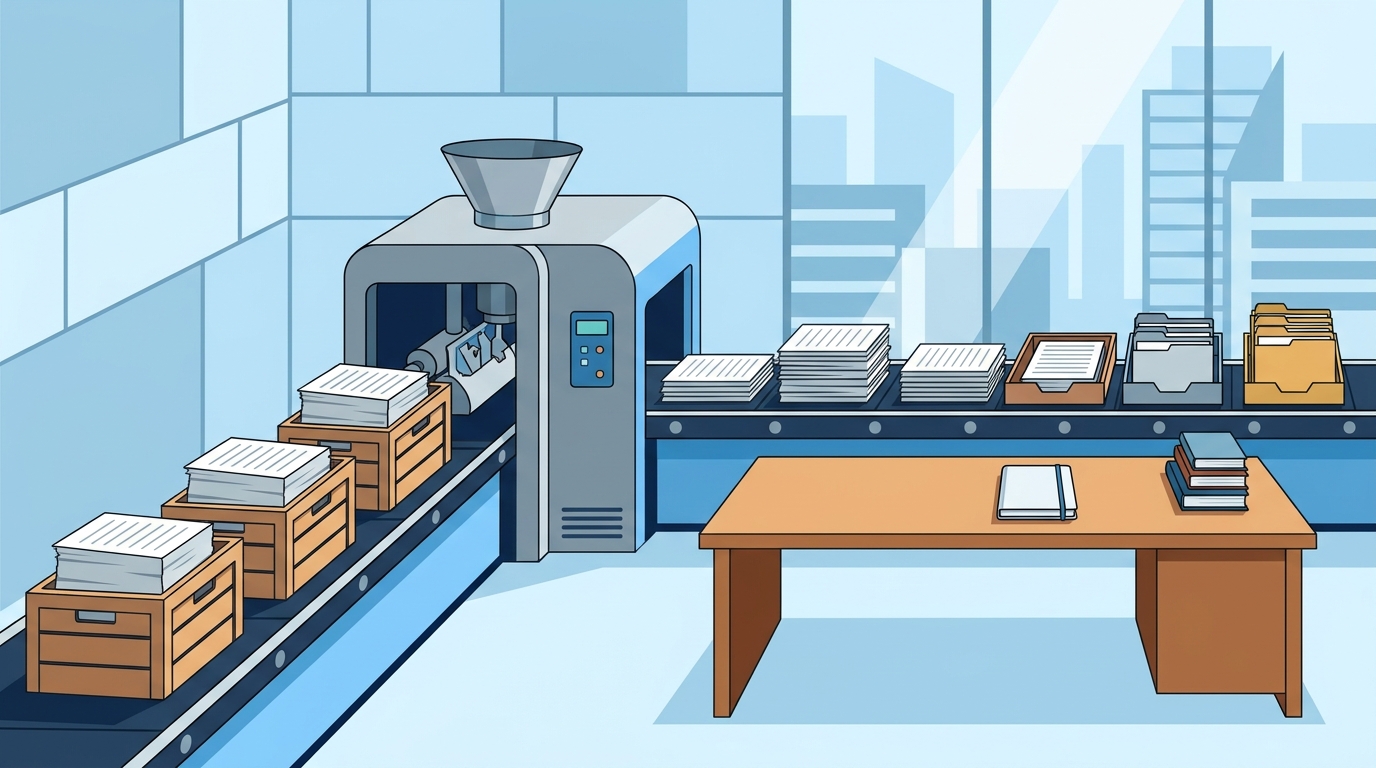
Finally, a task is a good candidate if it fits into a larger, repeatable workflow rather than existing as a one-off event. SmartAIWorld Academy defines a workflow as a sequence of steps that includes a trigger, inputs, transformation, review, and output. If the task is a one-time project with no future repetition, the time spent setting up an AI solution may not be worth the return on investment. However, if the task occurs weekly or monthly, building an AI-assisted workflow creates compounding time savings. A project manager who creates status updates every Friday is building a workflow that AI can support efficiently.
Key Takeaways
- Repetitive tasks with consistent steps are the best initial candidates for AI assistance.
- Clear inputs and defined outputs make it easier for AI to understand and execute a task.
- Always include a human review gate for tasks where errors carry significant consequences.
- Providing context and examples improves AI output quality and relevance.
- Tasks that fit into a repeatable workflow offer better long-term value than one-off projects.
- Start with low-risk tasks to build confidence before applying AI to critical operations.
Frequently Asked Questions
What is the first step in screening a task for AI?
The first step is to identify if the task is repetitive and involves information processing rather than physical action or complex emotional judgment.
Can AI handle creative tasks?
Yes, AI can assist with creative tasks like brainstorming or drafting, but it should be used as a tool for inspiration rather than a final decision-maker.
How do I know if a task is too complex for AI?
If the task requires deep contextual understanding of unstructured, ambiguous data or involves high-stakes ethical decisions, it may be too complex for current AI without significant human oversight.
Do I need to be a programmer to use AI for work tasks?
No, most practical AI tools for business are designed for non-technical users and rely on natural language prompts rather than code.
What is a human review gate?
A human review gate is a step in the workflow where a person checks the AI's output for accuracy, tone, and compliance before it is finalized or shared.
How long does it take to build an AI workflow?
Simple workflows can be built in minutes, while more complex systems may take a few days to refine prompts and review processes.
Conclusion
Identifying the right tasks for AI assistance is a skill that saves time and improves quality. By focusing on repetition, clarity, and risk, you can build workflows that work for you. SmartAIWorld Academy provides the structured training you need to move from curiosity to confident application. Explore the Academy to start building your first AI workflow today. Learn more: About SmartAIWorld and Donald.